

Skéina Skincare
Gesichtscreme für unreine Haut – Effektive Pflege für ein klares Hautbild
The perfect facial care for blemished skin. Clinically tested and developed by dermatologists.
So findest du die richtige Gesichtscreme für unreine Haut
Unreine Haut, besonders im Gesicht, gehört zu den häufigsten Hautproblemen. Hautprobleme kennen kein Alter oder Geschlecht, sie können jeden betreffen und von heute auf morgen durch verschiedene Einflüsse entstehen. Oft fangen Hautprobleme und das Gefühl von unreiner Gesichtshaut schon als Jugendliche an. Wenn dann die Morgenroutine mit den falschen Pflegeprodukten durchgeführt wird, kann sich das Problem bis weit ins Erwachsenenalter ziehen. Oft befasst man sich mit dem Thema der Hautpflege im Gesicht erst, wenn es zu unreiner Haut, Rötungen oder anderen Problemen kommt. Dabei kann man bereits vorher die Hautbarriere unterstützen.
Wenn du nach einer passenden Gesichtscreme für unreine Haut suchst, möchtest du meist mehrere Probleme gleichzeitig lösen: Pickel reduzieren, überschüssigen Talg regulieren und die Haut beruhigen, ohne sie auszutrocknen.
Genau hier liegt die Herausforderung: bereits das Richtige zu finden. Die Auswahl ist riesig, viele Cremes versprechen schönste Haut und beste Erfolge, und dann lässt man sich von Verpackung und Werbeversprechen leiten, diese Creme zu kaufen. Im Dschungel der Gesichtscremes findet man sich oft nur schwer zurecht. Viele Produkte im Handel gegen unreine Haut enthalten aggressive Inhaltsstoffe. Sie sollen die Unreinheiten beseitigen und angenehm riechen, doch gleichzeitig können sie die Haut zusätzlich reizen und langfristig sogar verschlechtern. Moderne Hautpflege setzt deshalb nicht auf Duftstoffe oder reizende Inhaltsstoffe, sondern zunehmend auf einen sanften und hautfreundlichen Ansatz, der langfristig das Hautbild unterstützt.
Eine hochwertige und durchdachte Gesichtscreme für unreine Haut sollte die natürliche Hautbarriere unterstützen und gleichzeitig Haut, die zu Unreinheiten neigt, gezielt pflegen. So kann sich langfristig ein ausgeglichenes Hautbild entwickeln. Viele Cremes schaffen kurzfristige Erfolge und reduzieren Unreinheiten, können aber die Hautbarriere belasten, was dann irgendwann zu weiteren Hautproblemen wie Rötungen oder trockener Haut führen kann. Besonders wichtig sind leichte, nicht komedogene Formulierungen, die die Poren nicht verstopfen und der Haut dennoch ausreichend Feuchtigkeit spenden. Denn unreine Haut wirkt häufig nicht nur fettig, sondern ist gleichzeitig auch empfindlicher oder dehydriert, was sich bei den falschen Cremes noch verstärken kann. Wird die Haut durch solche Cremes zu stark entfettet, produziert sie oft noch mehr Talg, wodurch dann wieder neue Unreinheiten entstehen können. Es ist also ein Kreislauf, der dafür sorgt, dass du immer wieder nach neuen Pflegemitteln suchen musst. Doch das muss nicht sein.
Bei Skéina steht eine minimalistische und effektive Hautpflege im Fokus. Statt die Haut mit zu vielen Wirkstoffen und 5–10 verschiedenen Cremes zu überfordern, geht es darum, die Haut wieder in Balance zu bringen und ihre natürliche Schutzbarriere gegen äußere Einflüsse zu unterstützen. Eine gut formulierte Pflege unterstützt die Haut mit regelmäßiger Anwendung dabei, ruhiger, klarer und widerstandsfähiger zu wirken. Entscheidend ist dabei nicht die Menge der Produkte, sondern die Qualität der Inhaltsstoffe und eine konsequente Anwendung im Alltag.

Wer sein Hautbild verbessern will, sollte die Ursachen verstehen.
It is often not clear to everyone why impure skin or reddened facial skin develops. And this is not always easy to answer, because impure skin is caused by a combination of many different factors. Particularly often, increased sebum production, clogged pores and inflammation are the cause of pimples and skin impurities. At the same time, hormonal changes, stress, diet or unsuitable care products can also further influence the skin's appearance.
Many people with impure facial skin, often without knowing it, resort to aggressive products that dry out the skin and further attack the natural skin barrier. In the short term, this can help, but in the long term, the skin barrier is further weakened and the skin becomes even more out of balance. The consequence of this is the search for more face creams that promise support.
We at Skéina therefore say: A good face cream for impure skin should not only work against pimples and clogged pores, but also soothe and stabilize the facial skin at the same time. Our Skéina skincare essences focus on supporting the skin without irritating it. A regular and simple routine is particularly important here. Because too many different products or frequent product changes can additionally stress the skin and promote irritation. Often, different ingredients react negatively with each other and cause burning or itching as well as further damage to the skin.
In addition to the causes of impure facial skin already mentioned, external influences such as pollution or UV radiation also have an influence on how our facial skin develops. Therefore, the care should not only have a clarifying effect, but also provide moisture and protect the skin from external stresses. A healthy skin barrier is crucial for the skin to be able to regenerate in the long term and for a well-groomed, natural skin appearance to emerge again. Anyone who wants to sustainably improve impure skin should therefore rely on high-quality and well-tolerated care instead of exclusively on aggressive anti-pimple products. Here, our clinically tested essences should be used instead of simple cosmetics.

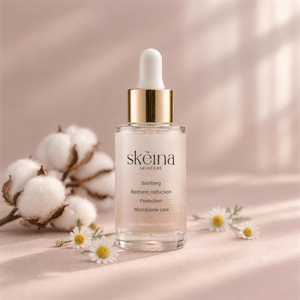
Anti-Blemish-Essence
€36,90
Clarifying intensive serum for blemishes and uneven skin. Refines pores, regulates sebum production, and promotes clear, even skin. Non-comedogenic.

Hochwertige Inhaltsstoffe, dermatologisch getestet
A high-quality face cream designed to improve blemished skin is primarily characterized by the balance of its ingredients. It should be light enough not to clog pores, yet provide sufficient nourishment and hydration. It should re-regulate sebum production and rebuild the skin's natural protective barrier. Many people with blemished skin avoid creams for fear of oily skin or other undesirable reactions such as burning, redness, and itching. Another reason is the abundance of choices and the many promises. If you want to fight your blemished skin, you don't need 10 different care products, but often just one or two suitable products to help your skin stay healthy and stable.
When choosing a good face cream, ingredients are the important information you should pay attention to. They should be natural active ingredients that soothe the skin and at the same time help build a natural protective barrier without being aggressive. Good and well-thought-out formulations help to regulate excess sebum and significantly improve the skin's appearance in the long term. At the same time, the cream should be quickly absorbed and still provide moisture without leaving a heavy feeling on the skin. Especially for sensitive or stressed skin, which often produces blemishes, irritation-free compositions without unnecessary fragrances or aggressive additives are crucial.
Modern face care increasingly relies on minimalist concepts. This means: fewer products, but specifically selected ingredients with a clear function that are clinically tested. A good face cream should be easy to integrate into the daily routine without causing pressure and stress, and be pleasant to use both in the morning and in the evening. Regular use plays a decisive role, as sustainable improvements usually do not happen overnight, but through consistent care.
At Skéina, this approach is central:
- clear, high-quality care products
- support the skin instead of overwhelming it
- provide moisture without making it greasy
The goal is not the short-term drying out of pimples, but long-term healthy and balanced skin without pimples, without irritation, and without redness.
Die ideale Pflegeroutine bei unreiner Haut
Eine effektive Routine bei unreiner Haut muss nicht unnötig kompliziert sein. Tatsächlich profitieren viele Hauttypen mehr von einer einfachen und konsequenten Pflege als von vielen verschiedenen Cremes.
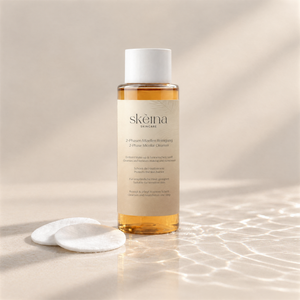
Der erste Schritt ist eine sanfte Reinigung der Gesichtshaut. Hier eignet sich unser 2-Phasen-Mizellenwasser, das Schmutz, überschüssigen Talg und Rückstände sanft entfernt, ohne die Haut auszutrocknen. Aggressive Reinigungsprodukte können die Hautbarriere schwächen und zu noch mehr Unreinheiten führen.
Titel
Nach der Reinigung folgt die Pflege. Bevor die Gesichtscreme für unreine Haut an die Reihe kommt, trägst du unsere Anti-Blemish-Essence auf – ein Serum, das Feuchtigkeit spendet, das Hautgefühl beruhigt und die Haut dabei unterstützt, ihr natürliches Gleichgewicht wiederzufinden. Die Formulierung ist nicht komedogen und duftstofffrei.
Titel
Tagsüber ist zusätzlich ein Sonnenschutz wichtig, da UV-Strahlung Rötungen und Pigmentflecken deutlich verstärken kann. Hier meinen wir nicht schwere Sonnenmilch, sondern einen leichten, nicht komedogenen Sonnenschutz. Viele Menschen unterschätzen den Einfluss von Sonnenlicht auf unreine Haut. Dabei gehört der UV-Schutz zu den wichtigsten Schritten einer modernen Hautpflege.
Titel
Ebenso wichtig bei der Pflege ist Geduld. Oft werden zu schnelle Ergebnisse erwartet und Produkte zu schnell gewechselt oder es werden zu viele Wirkstoffe und Cremes gleichzeitig verwendet. Genau das kann die Haut jedoch zusätzlich reizen. Eine klare Routine mit wenigen, gut abgestimmten Produkten ist meist deutlich effektiver, schonender und nachhaltiger. Dein Ziel sollte immer sein, die eigene Hautbarriere zu unterstützen und die Haut langfristig zu stabilisieren.
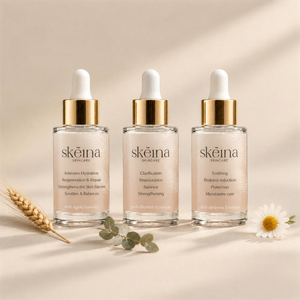
Unsere Essences
Drei Essences für unterschiedliche Hautbedürfnisse – duftstofffrei und für die tägliche Routine morgens und abends.


-
Start

Was du von Skéina erwarten kannst
Your results
Mit den Essences von Skéina bekommt deine Haut Feuchtigkeit und fühlt sich direkt angenehm an.
Das kann das Spannungsgefühl mildern, das trockene Haut oft mit sich bringt.
Hyaluron (Sodium Hyaluronate, enthalten in der Anti-Redness und der Anti-Aging Essence) bindet Feuchtigkeit an der Hautoberfläche, ohne dass dein Gesicht fettig wirkt.
Die Haut fühlt sich direkt geschmeidiger an.
-
Routine

Was du von Skéina erwarten kannst
Your results after 2 weeks
Mit regelmäßiger Anwendung wird die Pflege zur Gewohnheit. Dein Hautbild kann mit der Zeit ruhiger und ausgeglichener wirken.
Niacinamid pflegt die Haut, Panthenol (in der Anti-Redness und der Anti-Aging Essence) beruhigt das Hautgefühl.
Die Pflege unterstützt deine Hautbarriere.
Das Ziel: dass du dich in deiner Haut wieder wohlfühlst und gern in den Spiegel schaust.
-
Dranbleiben

Was du von Skéina erwarten kannst
Your results after 4 weeks
Die Pflegeroutine festigt sich.
In der Anti-Aging Essence pflegt der Peptid-Wirkstoff Palmitoyl Tripeptide-38 die Haut und sorgt für ein glatteres Hautgefühl.
Feuchtigkeit polstert Trockenheitsfältchen optisch auf, die Haut wirkt gepflegter und ruhiger.
-
Langfristig

Was du von Skéina erwarten kannst
Your Results After 12 Weeks
Die Gesichtspflege ist zur leichten Routine übergegangen und bereitet sogar Freude.
Mit konsequenter Pflege kann dein Hautbild auf lange Sicht ebenmäßiger und ausgeglichener wirken.
Die Haut fühlt sich geschmeidig an und wirkt frisch und gepflegt.


Häufige Fragen
FAQ - Die häufigsten Fragen zu Gesichtscreme für unreine Haut
Unreine Haut im Gesicht ist für viele Menschen unangenehm, besonders in der Pubertät. Deshalb haben wir von Skéina hier die wichtigsten Fragen für dich beantwortet: wie du unreiner Haut entgegenwirken und ihr wieder zu mehr Schutz und Natürlichkeit verhelfen kannst.
1. Welche Gesichtscreme hilft wirklich bei unreiner Haut?
Eine leichte, nicht komedogene Creme mit hautfreundlichen Inhaltsstoffen. Vermeide unbedingt aggressive Stoffe, die nur kurzfristigen Erfolg verschaffen, jedoch die Haut weiter austrocknen und reizen.
2. Sollte man unreine Haut eincremen?
Ja, unreine Haut entsteht durch verschiedene Einflüsse, oft spielt auch eine geschwächte Hautbarriere mit. Deshalb sollte auch unreine Haut mit leichten Essences gepflegt werden, um Feuchtigkeit zu spenden und das Hautbild auszugleichen.
3. Welche Inhaltsstoffe sind gut gegen Pickel?
Für Haut, die zu Pickeln neigt, eignen sich ausgleichende Pflegewirkstoffe wie Niacinamid und Zink. Mit regelmäßiger Anwendung pflegen sie das Hautbild und verfeinern es optisch. Bei ungeeigneten Produkten sind es oft aggressive Stoffe, die deine Gesichtshaut zusätzlich belasten.
4. Warum wird meine Haut trotz Creme schlechter?
Oft enthalten solche Cremes aggressive oder ungeeignete Wirkstoffe, welche zwar die Pickel beseitigen, aber deine Haut austrocknen und dadurch anfälliger für weitere Reizungen machen.
5. Wie oft sollte man Gesichtspflege anwenden?
Eine Gesichtspflege sollte täglich verwendet werden, am besten morgens und abends konsequent. Der Grund dafür ist, dass unsere Haut den ganzen Tag den unterschiedlichsten Einflüssen standhalten muss.
6. Kann Sonnenschutz bei unreiner Haut verwendet werden?
Ja, Sonnenschutz ist sogar sehr wichtig, um die Haut vor UV-Belastung zu schützen. Wähle einen leichten, nicht komedogenen Sonnenschutz und trage ihn tagsüber als letzten Pflegeschritt auf.
7. Wie lange dauert es, bis sich die Haut verbessert?
Das ist individuell verschieden und hängt vom Zustand deiner Haut ab. Veränderungen im Hautbild brauchen Zeit, gib deiner Routine bei konsequenter Anwendung einige Wochen. Verschlechtert sich deine Haut dauerhaft, lass das dermatologisch abklären.
8. Ist weniger Hautpflege besser?
Ja, minimalistische Routinen funktionieren häufig besser, da Inhaltsstoffe sich nicht gegenseitig negativ beeinflussen können. Oft reicht eine sanfte Reinigung und 1-2 Pflegeprodukte aus.
9. Was sollte man bei unreiner Haut vermeiden?
Zu viele verschiedene und nicht aufeinander abgestimmte Produkte sowie aggressive Inhaltsstoffe solltest du bei unreiner Haut unbedingt vermeiden.
10. Wo finde ich hochwertige Gesichtspflege für unreine Haut?
Hochwertige Gesichtspflegeprodukte wie Cremes oder Essences findet man bei spezialisierten Marken und Herstellern wie Skéina. Skéina steht für Dermokosmetik mit pharmazeutischem Anspruch – aus der Erfahrung von Pharmaindustrie und Apotheke, dermatologisch getestet und mit PZN gelistet.
11. Kann trockene Haut gleichzeitig unrein sein?
Ja, unreine Haut kann gleichzeitig einen Feuchtigkeitsmangel haben. Dies ist oft der Fall. Ist die Hautbarriere geschwächt, haben es Unreinheiten leichter, zu entstehen.
12. Sind natürliche Produkte besser?
Nicht automatisch sind rein natürliche Produkte besser. Es ist entscheidend, für welches Ziel die Anwendung ist, sowie die Verträglichkeit und Formulierung.
13. Sollte man Pickel austrocknen?
Nein, das ist ein aggressives Vorgehen, das kurzfristig zwar die Pickel reduzieren kann, jedoch auch zu starkem Austrocknen der gesamten Haut führen kann, was die Haut dann zusätzlich verschlechtert, statt sie zu verbessern. Wenn die Pickel also weniger werden, dann hast du das nächste Problem: eine ausgetrocknete Haut und eine geschwächte Hautbarriere.
14. Wie wichtig ist eine regelmäßige Routine?
Sehr wichtig – Konstanz ist entscheidend für langfristige Ergebnisse und den Erfolg, die unreine Haut zu reduzieren und das Hautbild nachhaltig zu verbessern. Da die alltäglichen Einflüsse unsere Haut beeinträchtigen, sollte eine regelmäßige Routine durchgeführt werden.
15. Können Stress und Ernährung unreine Haut beeinflussen?
Ja, beides kann das Hautbild deutlich beeinflussen. Solltest du eine Verschlechterung des Hautbildes feststellen, seit du mehr Stress hast oder deine Ernährung umgestellt hast, empfehlen wir, dies dermatologisch abklären zu lassen.
